Eyewear Guide · Top Sun Glasses
A Buyer’s Guide to the Best Photochromic Sunglasses Cycling: Oakley, Tifosi, and What the Data Shows
This guide examines photochromic cycling eyewear across lens technology, frame construction, and verified buyer ratings — with specific attention to Oakley’s position in the category.
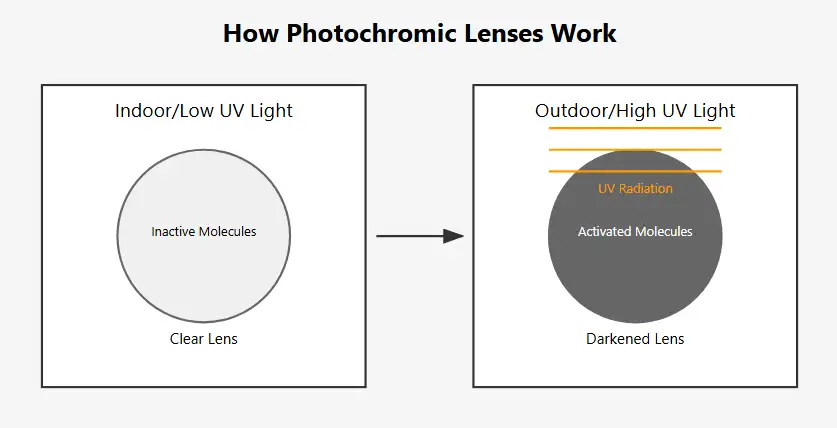
Selecting the best photochromic sunglasses cycling requires more than choosing a recognizable logo. Photochromic lenses — which darken in bright light and lighten in low light — address a specific problem cyclists face: variable conditions across a single ride. Oakley, founded in 1975 in Southern California by James Jannard, has occupied the performance eyewear market for five decades and remains one of the most reviewed cycling lens brands globally. This article examines the brand’s lens technology, construction quality, and what more than 6,600 verified buyers actually report.
The divergence between the 4.5/5 recorded on Oakley Standard Issue and the 3.2/5 on Oakley’s own website is analytically significant. Standard Issue serves a military and law enforcement buyer base that values performance reliability above all else — a cohort likely to report satisfaction with optical and durability performance. The broader consumer channel on oakley.com captures a wider range of expectations, including buyers influenced by brand positioning rather than technical requirements. For buyers of the best photochromic sunglasses cycling specifically, the Standard Issue ratings are arguably the more directly relevant benchmark. Purchases through Oakley Standard Issue channels report higher satisfaction rates based on available data.
The Heritage Behind the Best Photochromic Sunglasses Cycling
Oakley began in 1975 as a handlebar grip manufacturer before pivoting to eyewear in the early 1980s. Its Razorblades, released in 1984, established the brand as a performance sports optical company rather than a fashion house. Today, Oakley operates as a subsidiary of EssilorLuxottica, the world’s largest eyewear conglomerate, a position that grants it significant manufacturing scale and distribution reach. Among photochromic cycling glasses, Oakley’s Prizm technology is its primary differentiator in the current market.The brand’s photochromic cycling glasses line sits within a portfolio that spans ski goggles, prescription frames, footwear, and apparel. Prizm Photochromic lenses — available across several cycling-specific frames including the Jawbreaker and Sutro Lite Sweep — represent Oakley’s answer to the variable-light problem endemic to road and trail cycling. EssilorLuxottica’s ownership has not visibly diluted the performance engineering focus, though price points have risen steadily across the range.The American Academy of Ophthalmology advises UV400 protection for all outdoor eyewear, a standard Oakley’s full range of photochromic cycling glasses meets — a baseline requirement, not a distinguishing feature, across most premium cycling lenses today.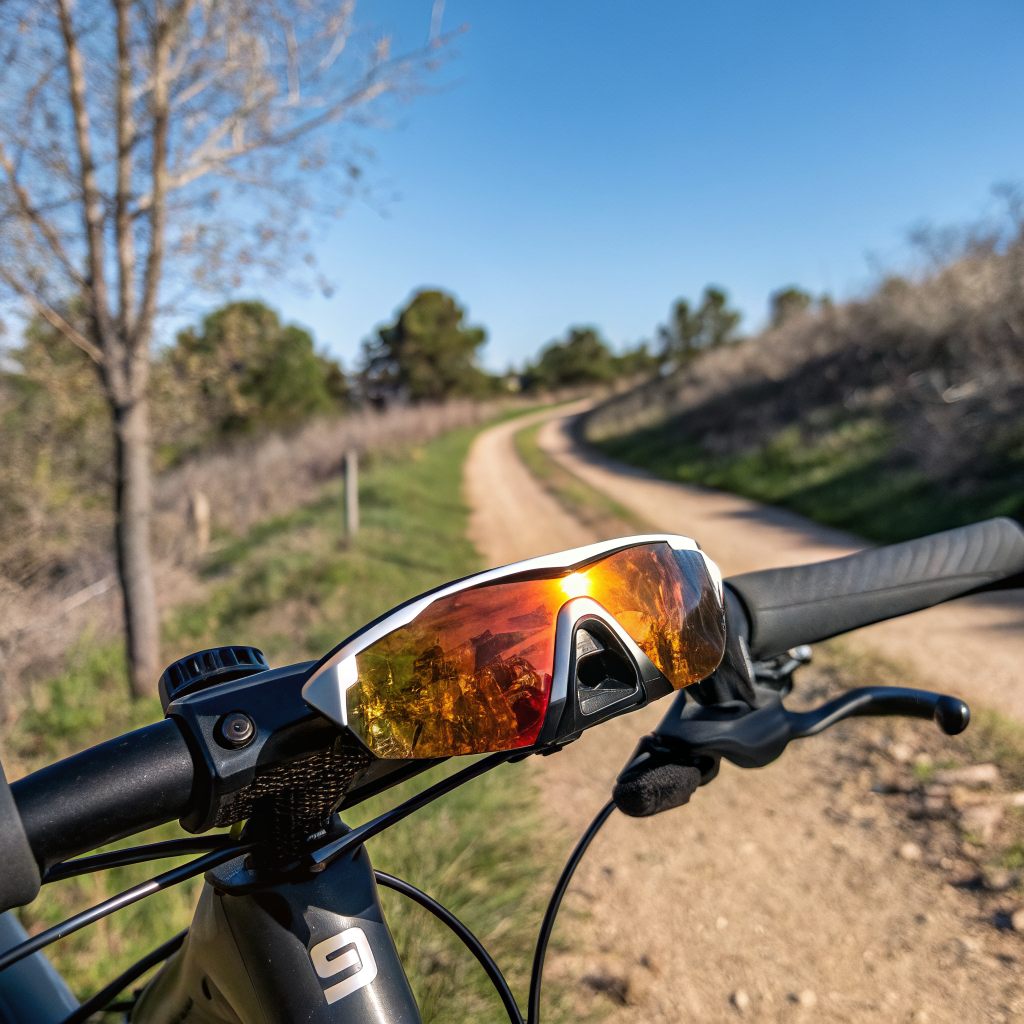
Design Language: What Defines Oakley Photochromic Cycling Glasses
Oakley’s cycling frames are immediately identifiable by their wraparound geometry, extended temple arms, and oversized single-shield or semi-rimless lens formats. These are not design choices made for aesthetics alone — they reflect the functional requirement of peripheral vision coverage and wind deflection during high-speed riding. The best photochromic sunglasses cycling from Oakley tend toward an athletic silhouette that prioritizes coverage area over refined proportions, which positions them visually apart from lifestyle brands operating in adjacent price brackets.Photochromic cycling glasses from Oakley are available in multiple colorways per model, though the frame shapes themselves — particularly the Jawbreaker with its elongated lens drop — are emphatically performance-oriented rather than versatile. Riders with narrower faces or lower nose bridges have historically reported fit challenges with Oakley’s standard sizing, a structural consideration that affects a meaningful share of buyers. Tifosi photochromic cycling glasses occupy a similar functional category but offer a notably broader range of fit geometries at lower price points.Against competitors like Rudy Project and Smith at comparable price levels, Oakley’s design language is more aggressively sport-specific. Tifosi photochromic cycling glasses, by contrast, tend toward narrower profiles that translate better across casual and athletic use. At the $180–$280 price tier, Oakley’s single-shield constructions remain a distinguishing visual signature that few competitors have replicated at equivalent optical quality.Materials and Craftsmanship: Under the Surface
Frame construction — Oakley’s cycling frames are built primarily from O-Matter, a proprietary lightweight nylon-based material the brand developed in-house. O-Matter is stress-resistant and carries a lower density than standard nylon, which contributes to reduced frame weight on longer rides. Unobtainium rubber is used on nose pads and temple tips — a material that increases its grip coefficient as it absorbs perspiration, a functionally relevant property for cycling-specific best photochromic sunglasses cycling applications.Lens specification — Oakley’s Prizm Photochromic lenses are constructed from a proprietary polycarbonate base with photochromic dye integrated into the lens matrix rather than applied as a surface coating. This construction method generally produces more consistent and durable light-adaptation response over time. The lenses carry UV400 certification, blocking 100% of UVA and UVB radiation. Prizm lens technology is engineered to enhance contrast in specific environmental conditions rather than simply reduce brightness, a distinction relevant to trail and road cycling applications.Build quality assessment — Review data presents a divided picture on frame durability. The pros data confirms “excellent durability and longevity” as a customer-reported strength. However, one verified buyer on Reviews & Opinions directly states that frame build quality fell short of price expectations — a perspective reflected in the 3.2/5 overall rating recorded on Oakley’s own website across 4,975 reviews. These two positions coexist in the data and represent genuine variance in ownership experience rather than a single definitive quality conclusion.Oakley Photochromic Cycling Sunglasses: The Ownership Experience
A four-hour road ride that begins under overcast skies and ends in full afternoon sun is exactly the scenario photochromic lenses are engineered to address. Oakley’s Prizm Photochromic lenses transition between approximately Category 1 and Category 3 light transmission in variable conditions, eliminating the need to carry an additional lens set. For cyclists who commute or train across dawn and dusk windows, this is a functional gain rather than a marketing premise. The Jawbreaker Prizm Photochromic and the Sutro Lite Sweep are the two models most commonly purchased in the cycling-specific best photochromic sunglasses cycling category. Both feature semi-rimless or shield constructions suited to medium-to-large head sizes. Buyers with narrower facial profiles may find the standard fit loose at the temples. Oakley’s Standard Issue channel — which records a 4.5/5 rating across 1,681 reviews — offers customization of frame color, lens tint, and nose bridge options, which partially addresses fit variability. Oakley photochromic cycling sunglasses in this range typically retail between $180 and $280.Frame weight on the Jawbreaker sits at approximately 33 grams — competitive within the shield-style cycling category. Temple pressure is generally reported as minimal during extended wear, though the aggressive forward tilt of the frame can create pressure concentration above the ear for some head geometries during rides exceeding two hours.Buyers seeking the most economical entry into the photochromic cycling category should note that the high price point is cited in the review data as a limitation. Several buyers flagged this directly, particularly when frame build quality did not align with price expectations in their specific purchase experience.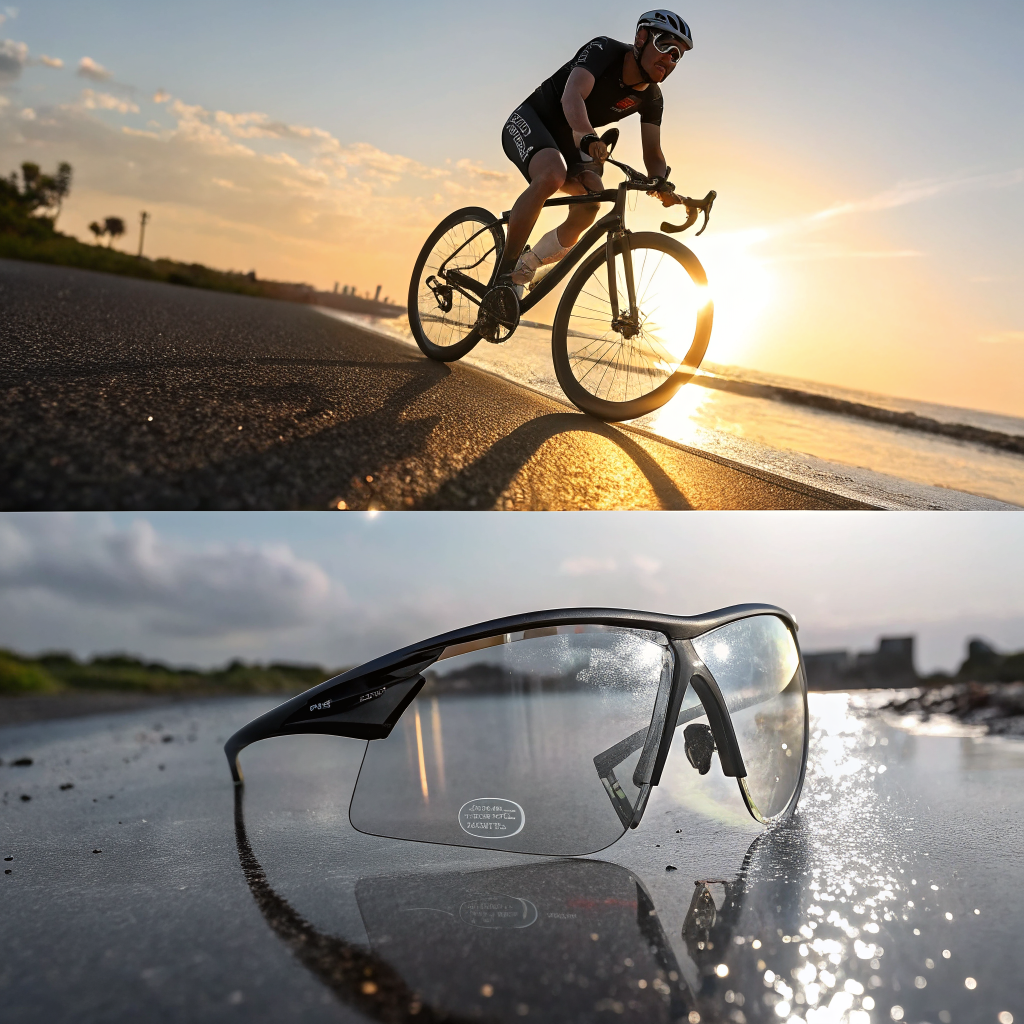
Customer Ratings: What 6,600+ Verified Buyers Report
| Platform | Rating | Reviews |
|---|---|---|
| Oakley Standard Issue | ★★★★★ 4.5/5 | 1,681 |
| Oakley (oakley.com) | ★★★☆☆ 3.2/5 | 4,975 |
What Real Buyers Are Saying
These reviews are pulled directly from verified purchase platforms to represent the range of real ownership experiences.“First, Oakley sunglasses have been my go to sunglasses for a very long time. Second, I can customize them with ease. Third, they arrive on time and I have always been satisfied.”
“The over all build quality of the frame seems less than something you’d pay $20 dollars for from a gas station, not $230 AUD.”
“In my experience oakley lenses are far superior than most cheap no name brand in terms of optical clarity, optical consistency, and light transmission quality.”
Pros & Cons at a Glance
✅ Strengths
- Superior optical clarity and lens quality, with buyers specifically noting advantages in clarity, consistency, and light transmission versus unbranded alternatives
- Excellent durability and longevity reported across multiple verified buyer cohorts
- Easy customization options — frame color, lens tint, and nose bridge adjustments available through Standard Issue and direct channels
- Timely delivery and reliable service reported consistently by long-term Oakley customers
⚠️ Limitations
- Inconsistent frame build quality has been reported by buyers, with some noting the physical frame construction does not align with the premium price paid
- High price point across several models — some buyers find the cost difficult to justify relative to their actual frame experience
- Variable customer service experience has been noted across reviews, suggesting the post-purchase support is not uniformly consistent
Our Verdict on the Best Photochromic Sunglasses Cycling
Oakley’s lens technology is the genuine argument for the brand’s premium pricing. Prizm Photochromic lenses demonstrate measurable advantages in optical clarity, contrast enhancement, and light-transmission management — qualities that translate directly into cycling performance across variable conditions. Verified buyers on review platforms specifically cite optical consistency as a category where Oakley outperforms generic alternatives. For lens-led performance, best photochromic sunglasses cycling from Oakley deliver what the technical specification promises.Frame build quality represents the more contested dimension of the ownership experience. The review data includes buyers who report build quality below price expectations alongside others who report long-term durability. Oakley photochromic cycling sunglasses carry a 3.2/5 rating across nearly 5,000 reviews on the brand’s own platform — a figure that prospective buyers should factor into their assessment alongside the higher-rated Standard Issue channel data. Customer service experience is also reported as variable across platforms.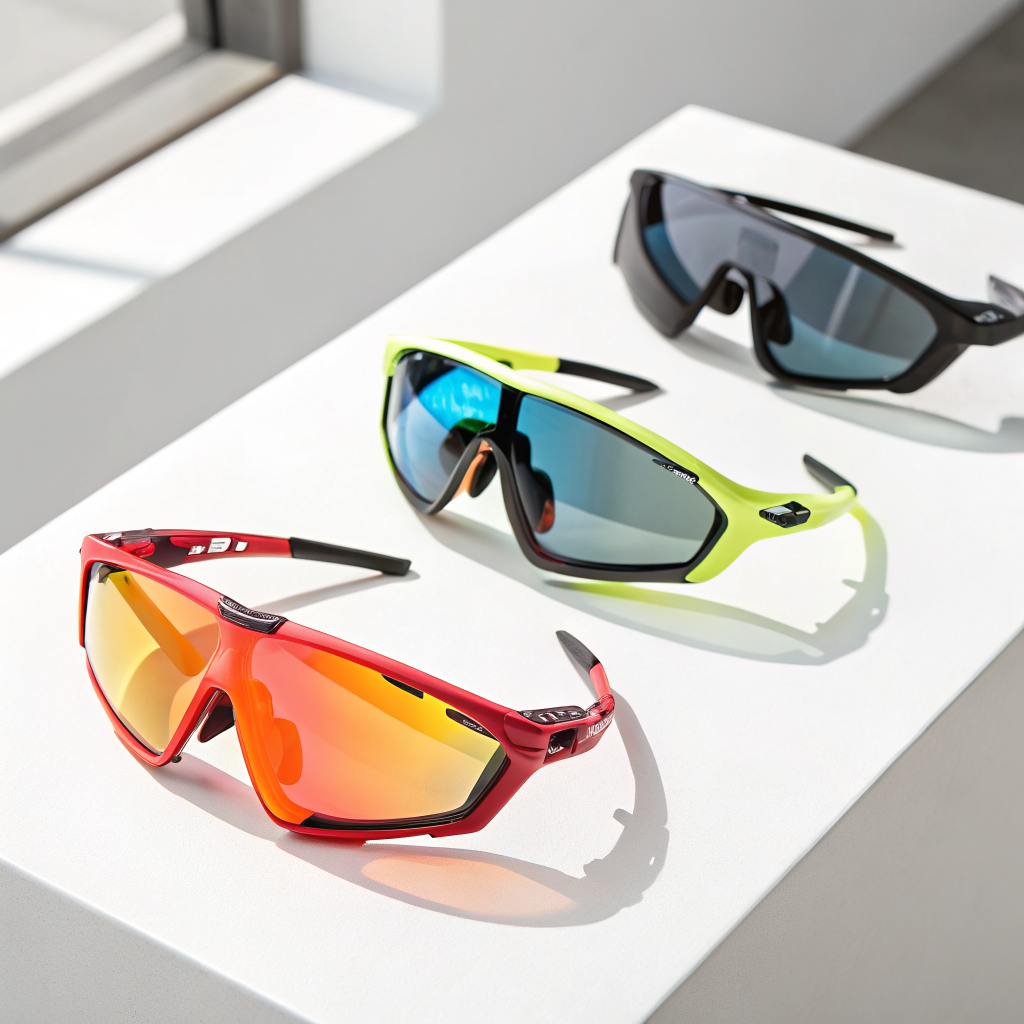
Explore More Eyewear Analysis
Browse our independent guides and expert reviews across every price range.Read More GuidesHow to Choose the Right Pair of Photochromic Cycling Glasses
Oakley’s cycling-specific frames — particularly the Jawbreaker and Sutro Lite Sweep — are designed for medium to large head sizes with average to high nose bridges. Buyers with narrower or lower-profile facial structures should assess fit carefully before committing to a shield-format frame, as the standard sizing does not accommodate all face geometries equally.Budget directly determines what lens technology is accessible. Tifosi photochromic cycling glasses enter the category around $60–$90, offering functional photochromic performance without Prizm-level contrast engineering. Oakley’s best photochromic sunglasses cycling range from $180 to $280, where the premium is primarily attributable to lens technology rather than frame material. For a broader analysis of outdoor eyewear value across price tiers, consult our guide to the best sunglasses for outdoor activities. Tifosi photochromic cycling glasses represent the most practical entry point for budget-conscious riders who still require genuine photochromic function.Counterfeit Oakley frames circulate at scale in secondary markets. Genuine pairs carry a laser-etched “O” logo on the lens, embossed branding on the temple arm, and packaging with a verifiable product barcode. Lens optical quality is the most reliable differentiator — genuine Prizm lenses produce no visible distortion at peripheral angles, whereas counterfeit lenses typically do.The broader market for best photochromic sunglasses cycling offers meaningful choice at every price tier, and the decision between brands like Oakley and Tifosi photochromic cycling glasses ultimately depends on whether optical performance engineering or frame fit versatility carries more weight for the individual rider. UV400 compliance — the baseline standard for safe cycling eyewear recommended by ophthalmological bodies — is met across both brands’ photochromic ranges. Oakley’s lens advantage is data-supported and buyer-confirmed; its frame consistency is more variable, as the ratings across platforms make clear. Riders who prioritize lens quality above all other criteria have a factual basis for choosing Oakley; those prioritizing fit range or value-per-dollar have equally factual grounds for considering alternatives.“With an aggregated rating of 3.9/5 across 6,600+ verified reviews and a measurable divergence between lens quality praise and frame build criticism, Oakley’s photochromic cycling range is a product whose optical merits are buyer-confirmed and whose value proposition depends on which channel you buy through and which frame you choose.”