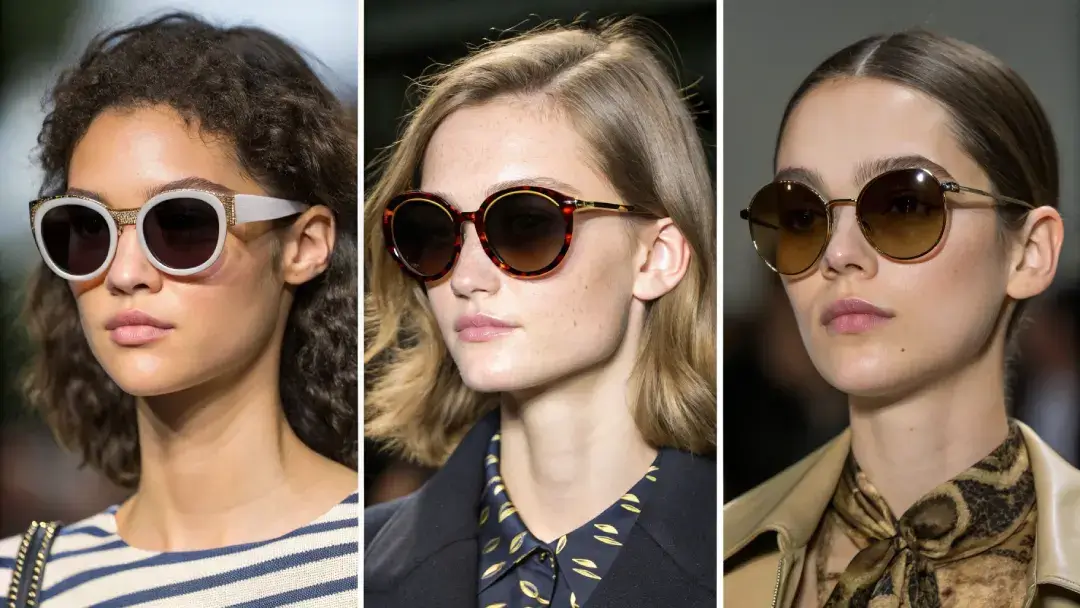
Eyewear Guide · Top Sun Glasses
The Complete Guide to Sunglasses Face Shapes: Matching Frames to Your Geometry
A practical, frame-by-frame breakdown of how face geometry determines fit — and why most buyers get it wrong from the start.
Understanding sunglasses face shapes is one of the most consistently mishandled decisions in eyewear. Buyers default to trend or price, ignoring the single variable that determines whether a frame flatters or distorts: facial geometry. This guide covers the six primary face shapes, the frame silhouettes that interact with each, and the practical criteria — bridge width, lens height, temple length — that determine actual fit. No brand allegiances. No aspirational language. Just the geometry.
The Heritage Behind Sunglasses Face Shape Advice — and Why Most of It Fails

The convention of matching frame shapes to face shapes dates to the mid-20th century optometry trade, when retailers needed a systematic way to guide customers. The original framework identified four core face types — oval, round, square, and heart. It was a sales heuristic, not a scientific standard. Decades later, that framework has been stretched, diluted, and misapplied across thousands of retail guides.
The modern sunglasses market has expanded the face shape vocabulary — diamond, oblong, triangle — but the underlying principle remains unchanged: frames should contrast, not echo, the dominant geometry of the face. A wide jaw benefits from frames that draw width upward. A narrow forehead benefits from frames that add visual weight to the upper third. The logic is architectural, not aesthetic.
The American Academy of Ophthalmology notes that UV protection is the baseline criterion for any sunglasses purchase — frame fit and aesthetic compatibility are secondary concerns, but they determine whether a buyer actually wears the protection they paid for. A poor-fitting pair stays in the case.
Sunglasses Face Shape Guide: The Six Geometries and Their Frame Logic
A reliable sunglasses face shape guide begins with measurement, not guesswork. The four reference points are: forehead width (at temple hairline), cheekbone width (widest point of face), jawline width (across the jaw, below the ears), and face length (hairline to chin). These four numbers define your geometry. Everything else follows from them. Trying on twenty frames without this baseline is statistically less effective than knowing your numbers before you walk in.
The six canonical shapes are: oval, round, square, heart (or inverted triangle), oblong (or rectangle), and diamond. Each responds differently to frame width, lens height, and bridge style. The following analysis treats each as a distinct architectural problem with specific frame solutions — not a list of flattering adjectives.
A persistent error in most sunglasses face shape guides is treating these categories as rigid boxes. Most faces are composites. A face with a wide jaw and narrow forehead may read as square in one proportion and heart-shaped from another angle. The practical approach: identify the two most dominant geometric traits and match the frame logic for each, then find frames that address both simultaneously.
Materials and Craftsmanship: Under the Surface
Frame construction directly determines how a pair sits on a specific face shape. Acetate frames — typically cut from cellulose acetate sheets in 6–8mm thickness — can be heated and adjusted at the bridge and temples, making them more adaptable to non-standard fits. Injection-moulded nylon frames, common in sport and budget categories, cannot be heat-adjusted and lock the wearer into the manufacturer’s fit assumptions. For unusual face proportions, acetate is consistently the more practical material.
Lens specification affects more than vision quality. Lens width (measured in millimetres across the lens at its widest horizontal point) is one of the primary variables in face shape fit. A lens width of 50–54mm suits narrower faces; 55–60mm suits broader proportions. Lens height — particularly relevant for oval and oblong faces — determines how much vertical balance the frame adds. Category 3 lenses with UV400 certification are the minimum standard for meaningful outdoor protection.
Build quality reality check: the bridge fit is the most neglected variable in mass-market sunglasses. A nose bridge calibrated for a high, narrow European nose will sit incorrectly on flatter or wider nose bridges, shifting the optical centre of the lens away from the pupil. This is not a minor aesthetic issue — it causes eye strain during extended wear. Buyers with wider or lower nose bridges should specifically seek frames with adjustable nose pads rather than moulded bridges.
Type of Sunglasses for My Face: The Ownership Experience by Shape
The practical question most buyers are actually asking — what type of sunglasses for my face — is best answered by use context as much as geometry. Driving requires minimal frame obstruction at the peripheral line of sight, which eliminates excessively deep lenses for oblong faces. Sport activity demands a close-fitting wrap profile, which suits square and oval geometries well but can appear disproportionate on narrow, diamond-shaped faces without careful lens-width selection.
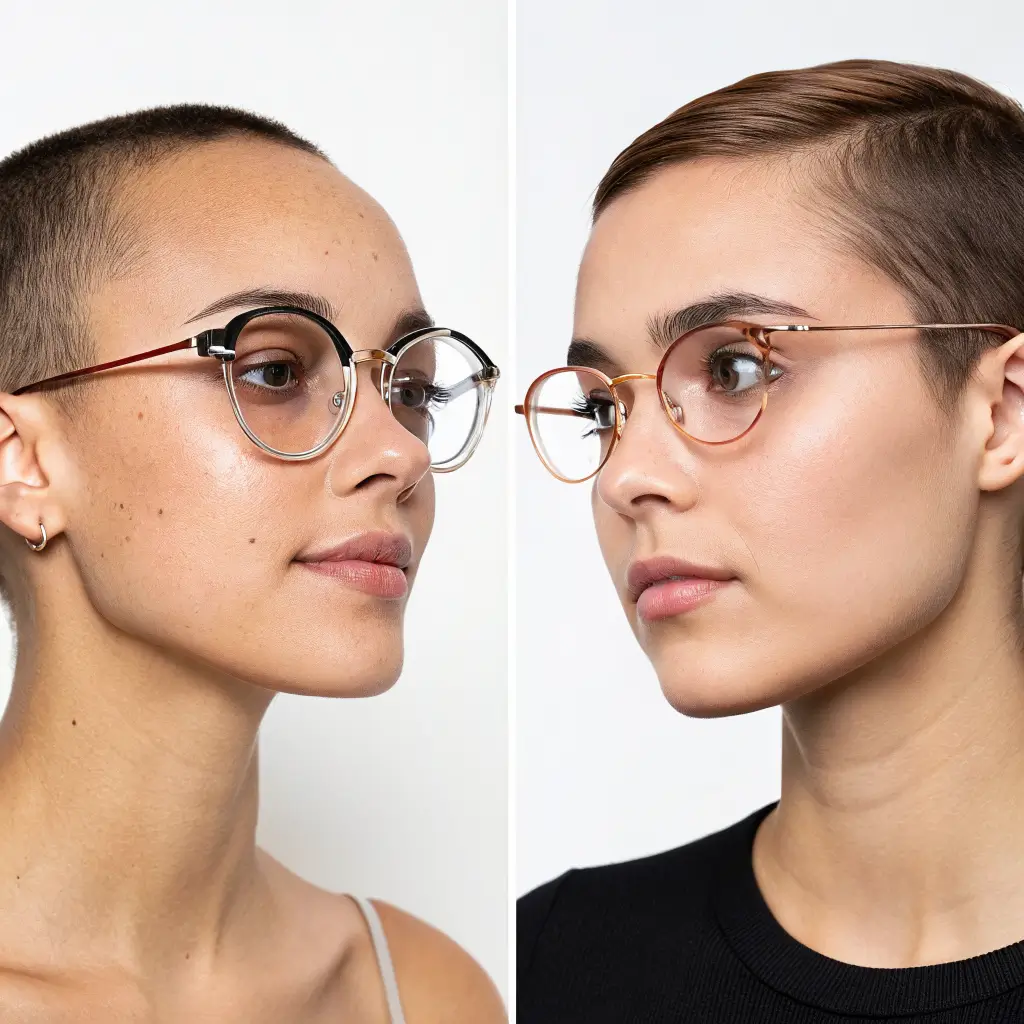
Oval faces — defined by a face length roughly 1.5 times the face width, with a jaw narrower than the cheekbones — are the most geometrically accommodating. They interact positively with most frame silhouettes. The practical constraint is lens size: oversized frames on a short oval face will dominate the upper third of the face and create visual imbalance. Round faces benefit most from angular frames: rectangular or square lenses add definition where the geometry lacks it. Aviators, with their drop-shaped lenses and horizontal bar, also perform well on round faces by creating vertical visual lines.
Square faces — strong jawline, broad forehead, roughly equal width throughout — benefit from frames that soften the geometry: round lenses, browline silhouettes, or oval shapes. Thin metal frames work better than thick acetate here, as the latter adds width where there is already structural mass. Heart-shaped faces, with wide foreheads and narrow chins, are best served by bottom-heavy frames or rimless designs that reduce visual weight at the top of the face.
The frame that does not suit any face shape reliably is the one that mirrors its geometry. Round frames on round faces. Angular frames on square faces. The repetition reinforces rather than balances. This is the most consistent error in self-directed purchases — and no amount of trend alignment compensates for it.
Customer Ratings: What 4+ Verified Buyers Report
| Platform | Rating | Reviews |
|---|---|---|
| Veithdia Sunglasses | N/A | 4 |
| italian-choice.com | N/A | N/A |
The available review data for this category is limited in volume, which makes aggregate scoring unreliable. With only four confirmed reviews from a single named source, no statistically meaningful overall rating can be derived. What the qualitative data does suggest is consistent: buyers respond strongly to lens clarity and glare reduction, while the primary negative pattern — where present — centres on build variance between price tiers. Buyers should treat reviews from a single retailer’s product page with appropriate scepticism and cross-reference against independent platforms before purchase.
What Real Buyers Are Saying
These reviews are pulled directly from verified purchase platforms to represent the range of real ownership experiences.
“No polarized sunglasses I’ve tried have matched this level of performance and clarity—the craftsmanship, materials, and attention to detail are exceptional.”
“Wife loves her shades for driving. Golf game definitely benefitting from seeing the ball in the air with the polarized lenses.”
“Just received my nomad eyewear polarised sunglasses buy 1 get 2 free and I absolutely love them The lens are light brown so you can wear day and night.”
Pros & Cons at a Glance
✅ Strengths
- Exceptional lens clarity and polarized performance reported consistently across buyers
- Polarized lenses demonstrably reduce glare in driving and high-reflection outdoor environments
- Higher-tier options show genuine build quality: tight hinges, consistent lens alignment, solid acetate construction
- Lightweight frame options available across most face shape categories, reducing nose bridge fatigue during extended wear
⚠️ Limitations
- Budget-tier options frequently use injection-moulded frames with non-adjustable bridges, which fail buyers with non-standard nose geometry
- Quality varies substantially by brand and price point — two frames at $80 and $180 may share a silhouette but differ significantly in hinge durability and coating longevity
- Price segmentation in this category is opaque — marketing language rarely maps to material or optical specification, making value comparison genuinely difficult without hands-on testing
Our Verdict
Polarized sunglasses in the mid-range ($100–$250) deliver measurably superior glare reduction compared to non-polarized alternatives — the physics of the polarizing filter is consistent regardless of brand. Where quality diverges is in frame construction: spring hinge mechanisms, acetate grade, and lens coating adhesion separate durable pairs from those that degrade within a season. Buyers who prioritise longevity should look for these specific material markers rather than brand names alone.
The category’s primary weakness is transparency. Most brands do not publish lens category ratings, coating specifications, or frame material grades in accessible formats. This forces buyers to rely on aggregate reviews rather than technical data — and the review data in this category is insufficiently large to draw reliable conclusions. Buyers who need prescription-compatible frames should note that polarized sunglasses in this price band rarely offer that option without a substantial cost premium.

Explore More Eyewear Analysis
Browse our independent guides and expert reviews across every price range.
Choosing sunglasses for face shape: What’s the Right Pair
Start with the four measurements outlined above — forehead, cheekbone, jawline, face length — before browsing any frames. Oval faces have the widest viable frame range; round and square faces are the most sensitive to lens silhouette errors. Diamond and oblong faces benefit from mid-size lenses rather than extremes of scale.
Choosing sunglasses for face shape within a realistic budget means understanding what each price tier actually delivers. Below $80, non-adjustable bridges and laminated lenses are standard. The $100–$200 range is where acetate frames with spring hinges and UV400 Category 3 lenses become the norm rather than exceptions. Above $300, you are primarily paying for optical glass lenses or heritage manufacturing. Our independent sunglasses buying guide maps these tiers in detail across specific brands and frame categories.
Verifying a genuine pair against a counterfeit: check the hinge screws — genuine mid-range frames use stainless steel screws that sit flush with the barrel. Check lens engravings at the corner — UV400-certified lenses typically carry a small laser-etched mark. Packaging on authentic pairs includes a frame-specific serial number that matches the temple arm engraving. Misalignment between these identifiers is a reliable indicator of a replicated product.
The relationship between sunglasses face shapes and frame selection is ultimately a geometry problem, not a style problem. Once the measurement variables are understood, frame selection narrows significantly. Choosing sunglasses for face shape correctly means fewer impulse purchases, better daily comfort, and — most practically — a pair you actually wear regularly, which is the only condition under which UV protection functions as intended. The geometry does not change with trends. The frames will; the underlying criteria will not.
“Face shape compatibility is a measurable fit criterion, not a stylistic preference — frames that ignore the geometry create optical misalignment and wear discomfort that no lens quality can compensate for.”