Eyewear Guide · Top Sun Glasses
Ray-Ban and the Standard for High Quality Sunglasses: A Brand Analysis
An independent look at Ray-Ban’s heritage, craftsmanship, design language, and what verified buyers across 11,000+ reviews actually report.
Among the most recognisable names in high-quality sunglasses, Ray-Ban occupies a position that recognition alone cannot fully justify. Established in 1936 under Bausch & Lomb for the United States Army Air Corps, the brand passed to Italian eyewear conglomerate Luxottica in 1999 — a group now operating as EssilorLuxottica, the world’s largest optical company. What follows is an examination of Ray-Ban’s design credentials, material construction, and the real ownership experience as recorded across more than 11,000 verified buyers on multiple review platforms.
The Heritage Behind High Quality Sunglasses

Functional optics, not fashion, forms the root of Ray-Ban’s origin. Developed in 1936 specifically to reduce glare for military pilots, the original Aviator model was shaped by a brief that demanded genuine optical performance over aesthetic novelty. That functional point of departure remains a measurable part of what positions Ray-Ban within the broader conversation about high-quality sunglasses — and civilian markets followed shortly after, with commercial production sustained across nine decades.
Ownership of Ray-Ban passed from Bausch & Lomb to Luxottica in 1999 for approximately $640 million. Under EssilorLuxottica’s current stewardship, Ray-Ban sits in a portfolio that includes Oakley, Persol, and Oliver Peoples. The corporate infrastructure behind this arrangement gives Ray-Ban access to large-scale manufacturing and global distribution channels — two factors with direct consequences for both price positioning and product consistency. Evaluated as the best sunglasses brand at its price tier, Ray-Ban’s primary competitors are Maui Jim, Carrera, and Tom Ford eyewear.
For readers researching how Ray-Ban compares within the broader luxury eyewear market, Vogue’s roundup of the best designer sunglasses provides useful context on where the brand sits relative to higher-priced European houses and emerging independent labels.
Design Language: What Makes Ray-Ban the Best Quality Sunglasses Reference
Three silhouettes — structurally unchanged for decades — form the backbone of Ray-Ban’s visual identity: the Aviator, introduced in 1936; the Wayfarer, introduced in 1956; and the Clubmaster, introduced in 1986. These are not designs built in response to seasonal trends. They are catalogue fixtures whose proportions have been refined incrementally rather than reinvented wholesale. Geometric consistency, not material innovation, is what separates Ray-Ban from competitors at a comparable price point. The brand produces high-quality sunglasses whose outlines remain immediately recognisable even without a logo in view.
Versatility is a legitimate criterion when assessing the best quality sunglasses across the mid-premium segment. Oval and heart-shaped faces are most reliably served by the Wayfarer’s trapezoidal frame; buyers with round or square faces may find its angular geometry less flattering. A wider range of face shapes accommodates the Aviator’s teardrop lens, though its visual footprint is notably larger. Black, tortoise, gold, and gunmetal dominate Ray-Ban’s core colour palette, with seasonal colourways available in limited production runs.
Within the $150–$250 price band, Ray-Ban sits above fast-fashion eyewear as a reference for best quality sunglasses, yet below independent acetate makers such as Moscot or l.a Eyeworks. The best sunglasses brand position Ray-Ban holds is one of accessible familiarity — a cultural weight that competitors at the same price cannot easily replicate. That recognition, however, does not automatically translate to superior material specification at this price tier.
Materials and Craftsmanship: Under the Surface
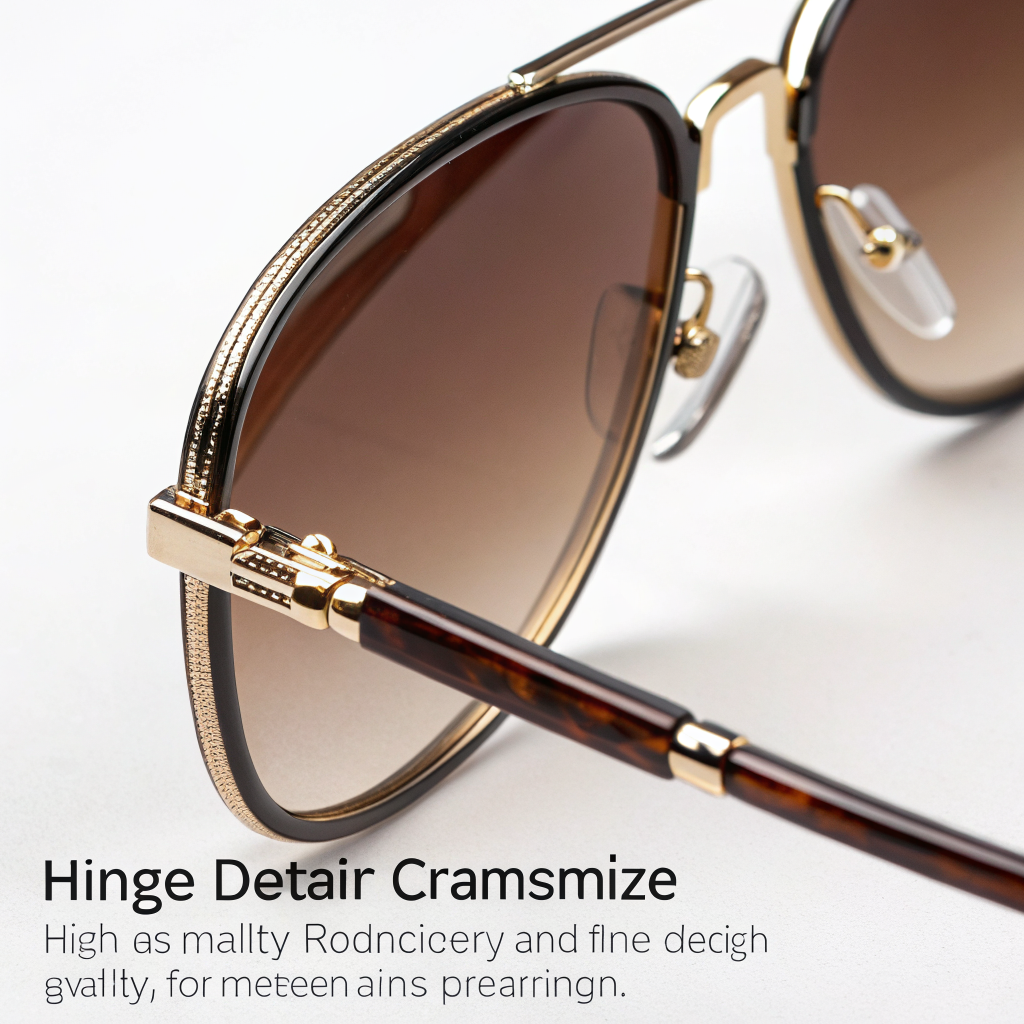
Frame construction — Two primary material categories account for Ray-Ban’s frame production: injected nylon, used in the Aviator and sport-oriented models, and cellulose acetate, used in the Wayfarer and Clubmaster. Acetate frames are cut from sheet stock and hand-finished at the temple tips and nose pads. A monel alloy with adjustable nose pads is used in metal frames, including the Aviator. Spring hinges appear as standard on most models, adding durability under regular handling. Barrel hinges are typical of high-quality sunglasses at this price point — Ray-Ban’s adoption of spring mechanisms represents a constructive advantage over that baseline.
Lens specification — UV400 protection is standard across Ray-Ban lenses, meaning wavelengths up to 400 nanometres are blocked, covering both UVA and UVB radiation. In most configurations, the base lens material is CR-39 optical resin — selected for its optical clarity and comparatively low weight. Impact-resistant variants use polycarbonate lenses. Polarised options are available across the core range under the RB designation, and G-15 — a proprietary grey-green tint developed for the military that transmits approximately 15% of visible light — remains available on select models.
Build quality assessment — A mixed picture emerges from the review data. Durable construction holding up well over time and a consistent fit are among the confirmed strengths noted by buyers. Replacement lenses, however, represent a separate quality concern: one buyer on the Replacement Lenses platform reported lens degradation in under twelve months. These are aftermarket or replacement components and may not be held to the same specification as original Ray-Ban production lenses.
Luxury Sunglasses Brand: The Ownership Experience
A practical scenario clarifies what the specifications mean in use: a buyer wearing the RB3025 Aviator through a morning commute, midday outdoor work, and an evening drive. In high-contrast daylight, the G-15 lens tint reduces glare effectively without washing out colour perception in lower light. Optical clarity is delivered by the CR-39 lens without the visual distortion occasionally found in lower-cost polycarbonate alternatives. Across varied light conditions, Ray-Ban’s standard lens configuration performs reliably for daily outdoor wear.
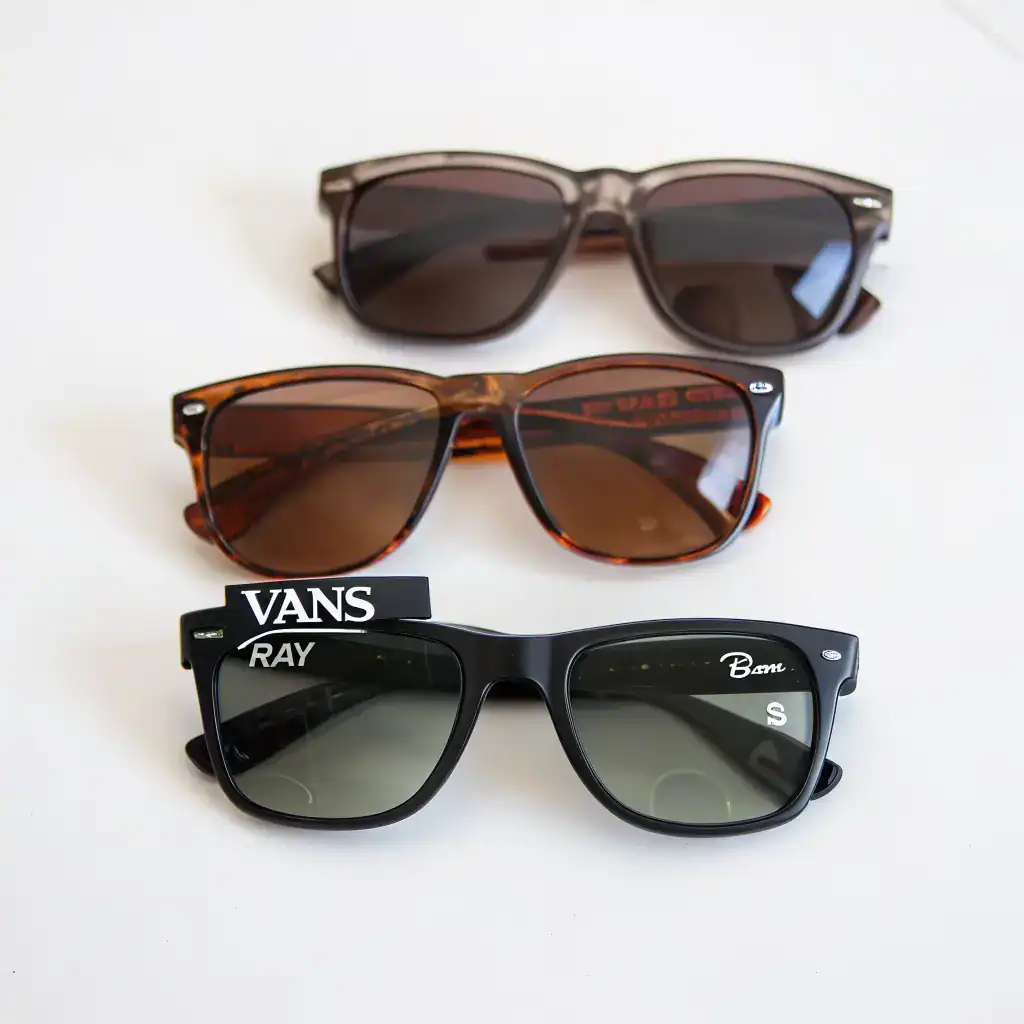
Broad by design, the buyer profile for Ray-Ban spans age ranges and style contexts — from professional to casual. At this price point, high-quality sunglasses typically attract buyers who want a recognisable frame with demonstrated optical credentials rather than an obscure independent label. The RB2140 Wayfarer suits oval and oblong face shapes most naturally; the RB3016 Clubmaster is better matched to diamond and heart-shaped faces. As a luxury sunglasses brand at an accessible price, Ray-Ban offers the widest range of face-shape compatibility across its core three models.
Extended wear comfort is reported positively in the review data. The spring hinge system reduces temple pressure, and the adjustable nose pads on metal frames allow for individual fit calibration. Acetate frames, by contrast, require professional adjustment when the initial fit is imprecise. Frame weight across the Aviator and Wayfarer ranges is moderate — sufficient for full-day wear without nose bridge fatigue in most cases.
Those considering Ray-Ban’s smart eyewear line — the Ray-Ban Meta, developed with Meta Platforms — should weigh review data indicating Bluetooth connectivity issues emerging within months of purchase. A verified buyer reported the glasses getting warm and disconnecting from their phone after approximately three months of use. This concern is specific to the technology-integrated product line and does not extend to the core optical range.
Customer Ratings: What 11,000+ Verified Buyers Report
| Platform | Rating | Reviews |
|---|---|---|
| Ray-Ban Official (Trustpilot) | ★★★☆☆ 3.0 | 7,367 |
| Replacement Lenses | ★★★★★ 4.7 | 623 |
The divergence in ratings across platforms carries genuine meaning. Sitting at 3.0 out of 5 across 7,367 reviews, Ray-Ban’s official Trustpilot profile reflects complaints concentrated around customer service, order fulfilment, and post-purchase support — not the optical product itself. The Replacement Lenses platform returns a 4.7 from 623 reviews, pointing to a markedly more satisfying experience among buyers who source compatible lenses through specialist channels. For buyers whose priority is high quality sunglasses rather than post-sale service, product ratings provide a more relevant signal than the aggregate average. Specialist optical retailers, based on the available data, appear to deliver a more consistent purchase experience than the official website.
What Real Buyers Are Saying
These reviews are pulled directly from verified purchase platforms to represent the range of real ownership experiences.
“I love the glasses. It’s perfect for my eyes. I wear its everyday. Thank you, Ray Ban, for the great product.”
“My Ray-Ban replacement lenses are trash in less than one year. Terrible product and will never be back.”
“Love the glasses. I’ve had them for about 3 months, and they have recently started getting warm and disconnecting from my phone a lot.”
Pros & Cons at a Glance
✅ Strengths
- Classic, structurally consistent designs — the Aviator, Wayfarer, and Clubmaster have maintained their proportions across decades of production.
- Durable frame construction that buyers report holding up well over an extended time in use.
- Consistent fit and comfort suitable for everyday wear across a wide range of buyers.
- Strong delivery performance and accessible customer service were noted positively by buyers in the review data.
⚠️ Limitations
- Replacement lenses have drawn quality concerns from buyers, with some reporting degradation in under twelve months of use.
- The smart eyewear range (Ray-Ban Meta) has generated reports of Bluetooth disconnection and device warmth emerging within the first few months of ownership.
- The official Ray-Ban website’s customer service receives mixed feedback across Trustpilot reviews, with the platform sitting at 3.0 out of 5 from over 7,000 reviews.
Our Verdict on High Quality Sunglasses from Ray-Ban
What the review data confirms aligns with what Ray-Ban’s core optical range delivers: durable frames, reliable UV400 protection, and designs that have maintained structural coherence since their respective introductions. At the $150–$250 price point, the Aviator’s monel alloy construction and CR-39 lens specification represent genuine material credentials. For buyers whose primary requirement is high quality sunglasses with a proven optical record and a consistent fit, those specifications are met by the core Ray-Ban catalogue.
A clear distinction should be drawn between the core optical range and the technology-integrated product line. Connectivity complaints within months of purchase are documented in reviews of the smart eyewear models. The official website’s 3.0 Trustpilot rating — drawn from over 7,300 reviews — further signals variability in the post-purchase service experience. Where replacement lenses are required, specialist optical retailers rather than generic third-party suppliers represent the more prudent sourcing decision, based on the available review data.
Explore More Eyewear Analysis
Browse our independent guides and expert reviews across every price range.
How to Choose the Right Pair of High Quality Sunglasses
Face shape offers the most practical starting point. Oval faces carry most Ray-Ban silhouettes without conflict. The angular geometry of the Wayfarer benefits round faces in particular. A strong square jawline reads well against the softer curve of the Aviator teardrop lens. Narrower faces gain visual structure from the Clubmaster’s brow-heavy profile.
Injection-moulded nylon frames begin at approximately $150, with acetate models carrying polarised lenses rising to $230 and above — that is, Ray-Ban’s price range in practice. Buyers consulting the men’s designer sunglasses style and comfort guide will find useful comparisons across brands competing at the same tier. Above $300, the best sunglasses brand conversation shifts toward independent acetate makers and heritage Japanese optical labels, where material specifications differ measurably. For buyers seeking high-quality sunglasses with proven UV protection at an accessible price, Ray-Ban’s core range represents a rational choice — though it is not the only defensible one at this tier.
Three checks are sufficient to authenticate a Ray-Ban purchase: the Ray-Ban logo should appear laser-etched onto the left lens rather than printed; hinge screws should sit flush without visible casting flash; and the case should contain a cleaning cloth bearing the Ray-Ban wordmark in consistent, clean typography. On counterfeit frames, lens engraving depth and hinge finish quality are the most reliable points of failure.
What Ray-Ban’s market position rests on is verifiable: the Aviator, Wayfarer, and Clubmaster rank among the most-produced sunglass silhouettes in history, and their optical specifications satisfy international UV protection standards. As a best sunglasses brand reference point for buyers entering the mid-premium segment, Ray-Ban offers a known quantity — UV400-certified high-quality sunglasses at a price that requires no specialist justification. The ownership experience, however, shifts considerably depending on which product line and which retail channel the buyer selects. That variability, more than any question about the optical product itself, is what the review data most clearly reflects.
“At a 3.7 aggregate across 11,000+ reviews, Ray-Ban’s optical range earns consistent approval from buyers — the gap between its 4.7-rated lens specialist channel and its 3.0-rated official platform suggests the product and the purchase experience are two separate conversations.”