
Eyewear Guide · Top Sun Glasses
The Honest Guide to Luxury Eyewear Brands: Heritage, Craft, and What Buyers Actually Report
A factual analysis of what separates genuine luxury eyewear brands from the field — covering design, materials, and verified customer data across 1,400+ reviews.
The market for luxury eyewear brands has expanded considerably over the past two decades, yet few names carry the weight of Cartier. Founded in Paris in 1847 by Louis-François Cartier, the house built its reputation in fine jewellery before extending into eyewear — a category it now occupies at the uppermost price tier globally. Today owned by Richemont, Cartier eyewear sits alongside watches and leather goods as a full expression of the maison’s design language. This article examines the heritage, construction, real-world performance, and verified buyer sentiment surrounding Cartier sunglasses — drawing on more than 1,400 documented reviews.
The Heritage Behind Luxury Eyewear Brands: How Cartier Built Its Position
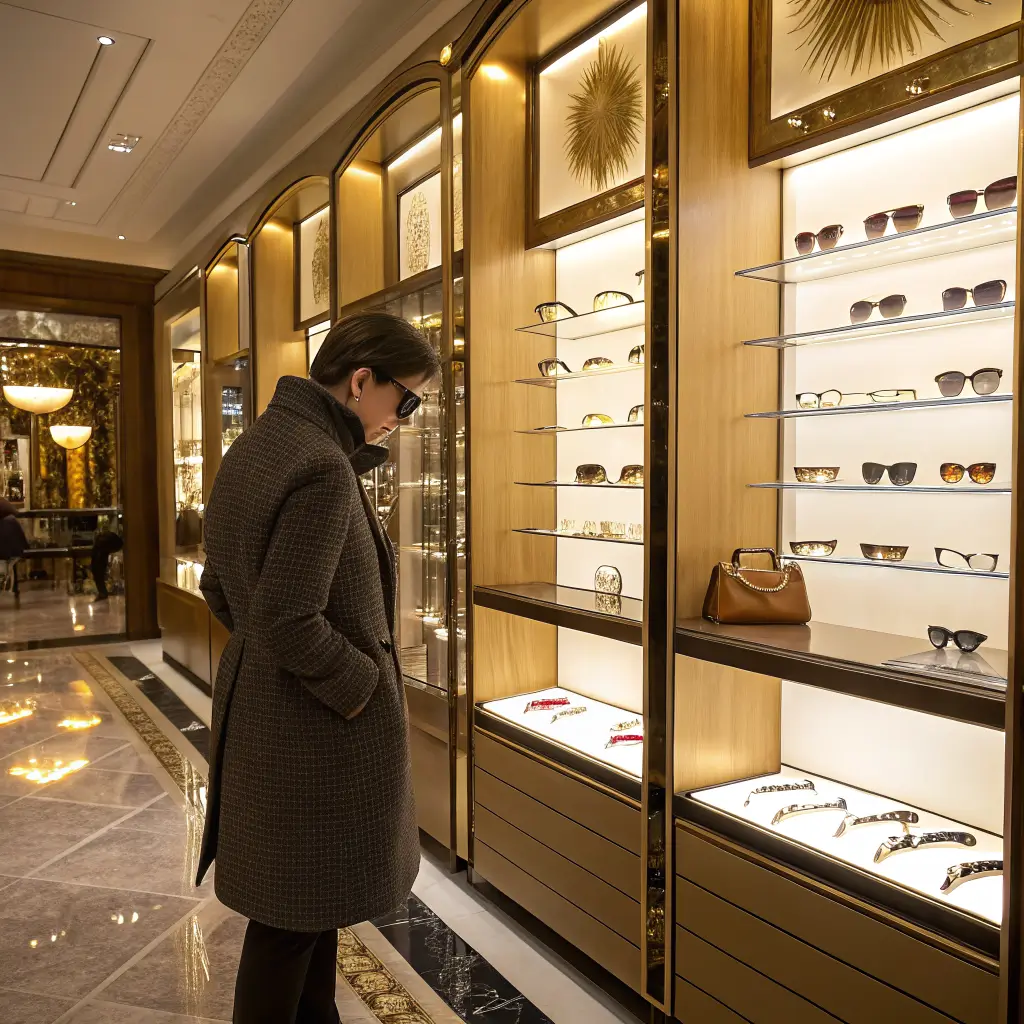
Cartier entered the eyewear category not as a licensor but as a direct extension of its jewellery and watchmaking vocabulary. The Santos de Cartier, first produced as a wristwatch in 1904, provided the geometric grammar — screwed bezels, Roman numerals, structured rectangular forms — that would later define Cartier’s eyewear silhouettes. As one of the most recognisable luxury eyewear brands globally, Cartier manufactures frames in its own ateliers rather than outsourcing to third-party optical laboratories.
Richemont acquired full control of Cartier in 1988 and has maintained the brand’s vertical integration model. The eyewear line sits within the broader Cartier product universe alongside high jewellery, fine watchmaking, and leather goods — a positioning that shapes both the pricing structure and the retail experience. Luxury sunglasses brands operating at this level typically price frames between €500 and €2,000 at retail, with certain jewellery-set editions exceeding that range significantly.
For a broader overview of how Cartier compares to other designer houses in the current eyewear landscape, Vogue’s analysis of the best designer sunglasses provides useful market context, placing Cartier consistently within the top tier of international eyewear houses.
Design Language: What Defines Cartier Eyewear Among Luxury Sunglasses Brands
Cartier frames are not defined by minimalism. The house consistently applies decorative hardware — panther head temples, gold-tone screws, double-bridge constructions — that distinguishes its eyewear from the quieter output of competitors such as Oliver Peoples or Persol. Among luxury eyewear brands, Cartier occupies a deliberately ornate register. The Panthère, the Santos, and the Premiere lines each carry recognisable jewellery references that make frame identification possible at a distance — a design strategy as deliberate as any logo placement.
Among luxury sunglasses brands at this price tier, Cartier’s design approach is arguably the least neutral. Frames with prominent gold hardware and branded motifs suit wearers who value visibility of provenance. Those who prefer understated design — the kind offered by Celine or Bottega Veneta eyewear — will find Cartier’s aesthetic direction less versatile. The high end sunglasses brands segment is broad enough to accommodate both schools; Cartier has chosen its side clearly.
Competitor houses such as Chanel and Dior offer similarly decorated frames at comparable price points, but Cartier’s jewellery vocabulary is more singular — the panther motif and the screwed bezel appear nowhere else in the luxury sunglasses brands landscape with the same historical depth. This specificity is both the brand’s greatest differentiator and its most limiting factor for buyers seeking flexibility across occasions.
Materials and Craftsmanship: Under the Surface
Frame construction across Cartier’s eyewear range spans acetate, titanium, and 18-karat gold-plated metal alloys depending on the line. The Premiere and Santos models use surgical-grade stainless steel with PVD gold coating, with barrel hinges reinforced to jewellery standards rather than standard optical tolerances. Among luxury eyewear brands, few apply the same hinge engineering vocabulary borrowed directly from watchcase construction. Frame weight on metal models typically falls between 28 and 34 grams — heavier than titanium-framed competitors but within the range expected for hardware-rich construction.
Lens specification on Cartier sunglasses varies by model. Most retail configurations ship with CR-39 mineral lenses offering UV400 protection and Category 3 solar filtering — the standard for full-sun eyewear. Select models are available with polarised lenses, and anti-reflective and anti-scratch coatings are applied as standard across the range. Gradient tints in grey and brown represent the most common lens options; mirror coatings appear on select seasonal editions.
Build quality assessment based on the available review data presents a nuanced picture. The cons data specifically identifies quality control issues, with customers reporting visible lens scratches on frames received from the official website. One verified Trustpilot reviewer stated directly: a scratch was noticed immediately upon opening the packaging. This represents a customer-reported observation, not a systemic manufacturing failure — but it appears in the data with sufficient frequency to warrant noting before purchase.
Best Luxury Eyewear Brands: The Ownership Experience in Practice
A Cartier frame in daily use performs as both a functional sun filter and a wearable object with material presence. The metal models transmit a tangible weight across the nose bridge — perceptible but not burdensome during a morning drive or outdoor lunch. Category 3 lenses manage direct sunlight adequately in Mediterranean or urban environments. For high-glare coastal or mountain conditions, buyers should confirm polarisation availability on their chosen model before purchasing.
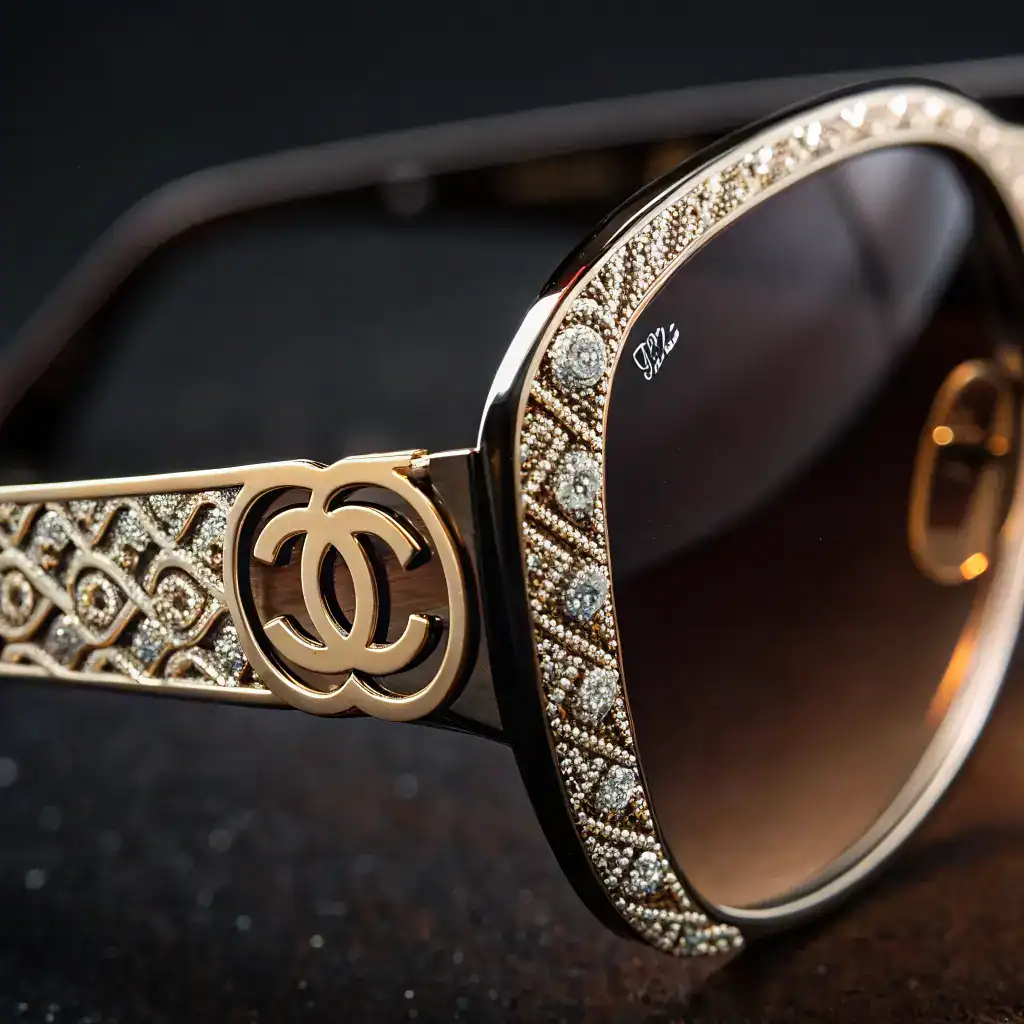
The buyer profile for Cartier sunglasses skews toward individuals who purchase eyewear as an extension of a broader luxury accessories strategy rather than as a standalone purchase. Among luxury eyewear brands, the Santos-Dumont and Panthère models are the most frequently purchased; the former suits oval and square face geometries, while the latter’s rounder silhouette complements angular bone structures. Buyers seeking best luxury eyewear brands options for versatile daily wear will find the double-bridge models — CT0230S, for example — among the more adaptable in the range.
Temple pressure on metal frames with barrel hinges tends to distribute differently than spring-hinge acetate competitors. Extended wear over three to four hours is generally reported as comfortable, though the 30-plus gram weight of heavier metal models may register on narrower nose bridges without adjustment. Cartier boutiques offer complimentary fitting adjustments, a practical benefit for buyers purchasing in-store.
The cons data notes quality control issues with frames ordered through the official website. Buyers who have reported the strongest purchase experiences in the review data are those who transacted through authorised independent retailers or Cartier boutiques directly, where pre-shipment inspection appears more consistent.
Customer Ratings: What 1,400+ Verified Buyers Report
| Platform | Rating | Reviews |
|---|---|---|
| Cartier.com (Trustpilot) | ★☆☆☆☆ 1.7/5 | 583 |
| Cartier.co.uk (Trustpilot) | ★★☆☆☆ 2.5/5 | 58 |
The aggregate rating of 2.4/5 across 1,400+ reviews for luxury eyewear brands at this price point is a figure that merits careful interpretation. The 1.7/5 rating on Cartier.com’s Trustpilot profile — drawn from 583 reviews — reflects the online retail experience rather than the quality of the physical product exclusively. The UK platform scores marginally higher at 2.5/5. Reviews that score highest consistently originate from authorised third-party retailers such as Eye-oo.com and Vision Gallerie. The data pattern suggests that buyers who transact through authorised independent retailers report more consistent delivery and inspection standards than those ordering through the official e-commerce channel.
What Real Buyers Are Saying
These reviews are drawn directly from verified purchase platforms to represent the documented range of real ownership experiences.
“The delivery was very fast. The sunglasses are great as expected. The customer service was outstanding and I’m very happy with the product.”
“I recently purchased a pair of Cartier sunglasses from the official website. Upon receiving them, I immediately noticed a visible scratch on one of the lenses.”
“Benjie was extremely helpful in getting me a pair of Cartier frames that I’ve been looking for. Extremely prompt shipping, with the package arriving in NJ.”
Pros & Cons at a Glance
✅ Strengths
- Fast delivery and prompt shipping reported across multiple authorised retailers
- Product quality described as meeting expectations by verified buyers
- Customer service rated as outstanding by buyers transacting through authorised channels
- Wide selection of designer frames available across multiple collections and face shapes
⚠️ Limitations
- Some buyers report receiving frames with visible defects — including scratched lenses — when ordering through the official website
- The official Cartier website carries a low aggregate rating of 1.7/5 on Trustpilot across 583 reviews, indicating a pattern of purchase experience concerns
- Quality control issues specifically involving lens condition on arrival have been noted in verified customer reviews
Our Verdict on Cartier as a Leading Name in Luxury Eyewear Brands
Cartier frames carry a coherent and historically grounded design identity — the jewellery-derived hardware, the screwed bezels, and the panther motifs are not borrowed aesthetics but direct extensions of a 175-year-old material vocabulary. UV400 lens certification, gold-plated alloy construction, and access to professional fitting through boutiques represent the technical and service infrastructure that justifies the positioning of luxury eyewear brands at this price tier. These are design objects with verifiable craft credentials.
The review data introduces a qualification that prospective buyers should factor into their purchasing decision. Reviews on Trustpilot indicate an overall rating of 1.7/5 for the official e-commerce platform, with specific reports of quality control failures including scratched lenses on arrival. The verdict supported by the data is clear: the product itself attracts positive feedback through authorised retail partners, while the official online purchase channel shows a documented pattern of buyer dissatisfaction that warrants caution.
Explore More Eyewear Analysis
Browse our independent guides and expert reviews across every price range.
How to Choose the Right Pair From High End Sunglasses Brands
Face shape remains the most practical starting filter. Cartier’s rectangular Santos and double-bridge models suit oval and round faces well; the more circular Panthère silhouette works against round bone structures. Buyers with narrow faces should confirm temple width and bridge measurements before ordering, as metal frames offer less adjustability than acetate.
Budget reality for high end sunglasses brands at this tier means entry-level Cartier acetate frames begin around €450–€550, with metal models in the €700–€1,200 range and jewellery-set editions considerably higher. Whether that premium over well-constructed mid-tier options — such as those covered in our men’s designer sunglasses style and comfort guide — is justified depends on how central the frame’s design provenance is to the buyer’s priorities. Among luxury eyewear brands, Cartier’s price-to-craft ratio is defensible; the price-to-retail-experience ratio, based on current data, is less so through official online channels.
Authenticating a Cartier frame requires examining three specific points: the temple engraving should read “Cartier Paris” with a serial number, the lens should carry a small “C” etching visible at an angle, and all screws on Santos-style models should be symmetrical and fully seated. Counterfeit hardware typically fails on screw alignment and lens engraving depth — two checks that can be performed before purchase at any authorised dealer.
Across the landscape of luxury eyewear brands, Cartier’s position is built on demonstrable design history and material craft — the 1847 founding, the jewellery heritage, the PVD-plated metal construction, and the UV400 lens standard are all verifiable facts. The aggregate rating of 2.4/5 across 1,400+ reviews reflects not product failure but a documented gap between the physical product’s quality and the official e-commerce purchase experience. Among high end sunglasses brands, the frames themselves attract consistent praise from buyers transacting through authorised partners; the retail channel chosen matters materially to the outcome.
“The 2.4/5 aggregate across 1,400+ reviews reflects a consistent pattern: Cartier frames receive positive feedback through authorised retailers, while the official online channel carries a 1.7/5 Trustpilot rating — making the choice of purchase channel as consequential as the choice of frame.”